
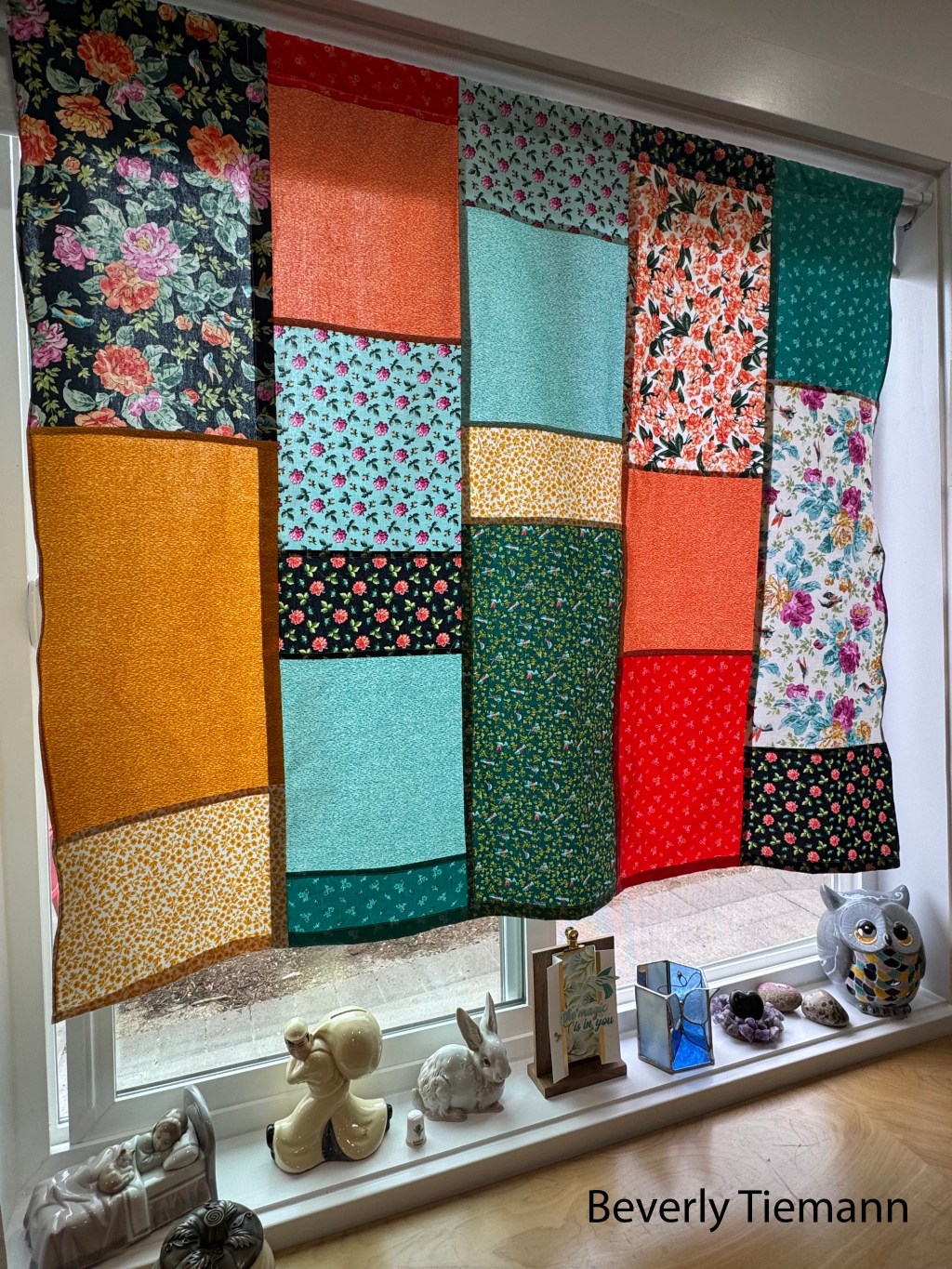
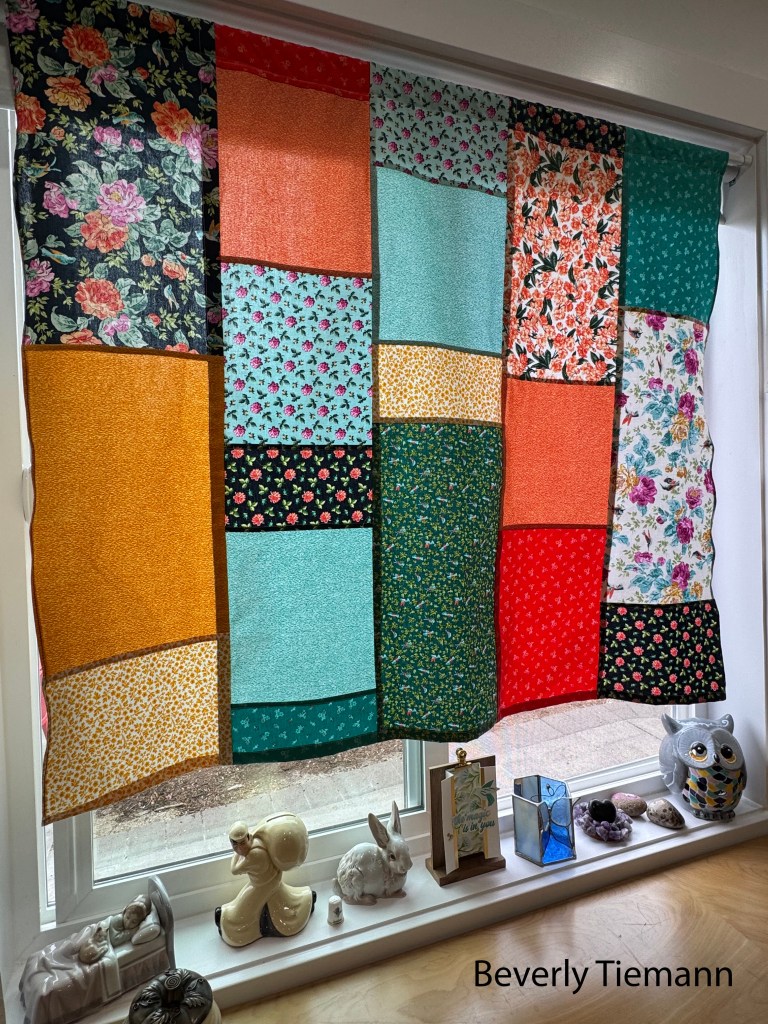
Machine stitching makes quick work
Last week, the electric company had to remove a gigantic tree that provided shade for my desk. It has been hot outside and I needed a curtain fast! Traditional pojagi/bojagi is made with scraps of fabric that are stitched together by hand. This project is made with a respectful nod to the purpose of the technique, yet creates the beautiful flat-felled seams by sewing machine. The window is fairly large, about 48 inches x 48 inches. That provides a lot of opportunity for a quilty girl’s heart to have a patchwork-like pattern with a varity of fabrics to admire everyday. There are 18 fabrics in the Spring Nectar Fat Quarter Sampler from Connecting Threads. I selected twelve of the beautiful florals to make this quick curtain.
Figuring Out the Math
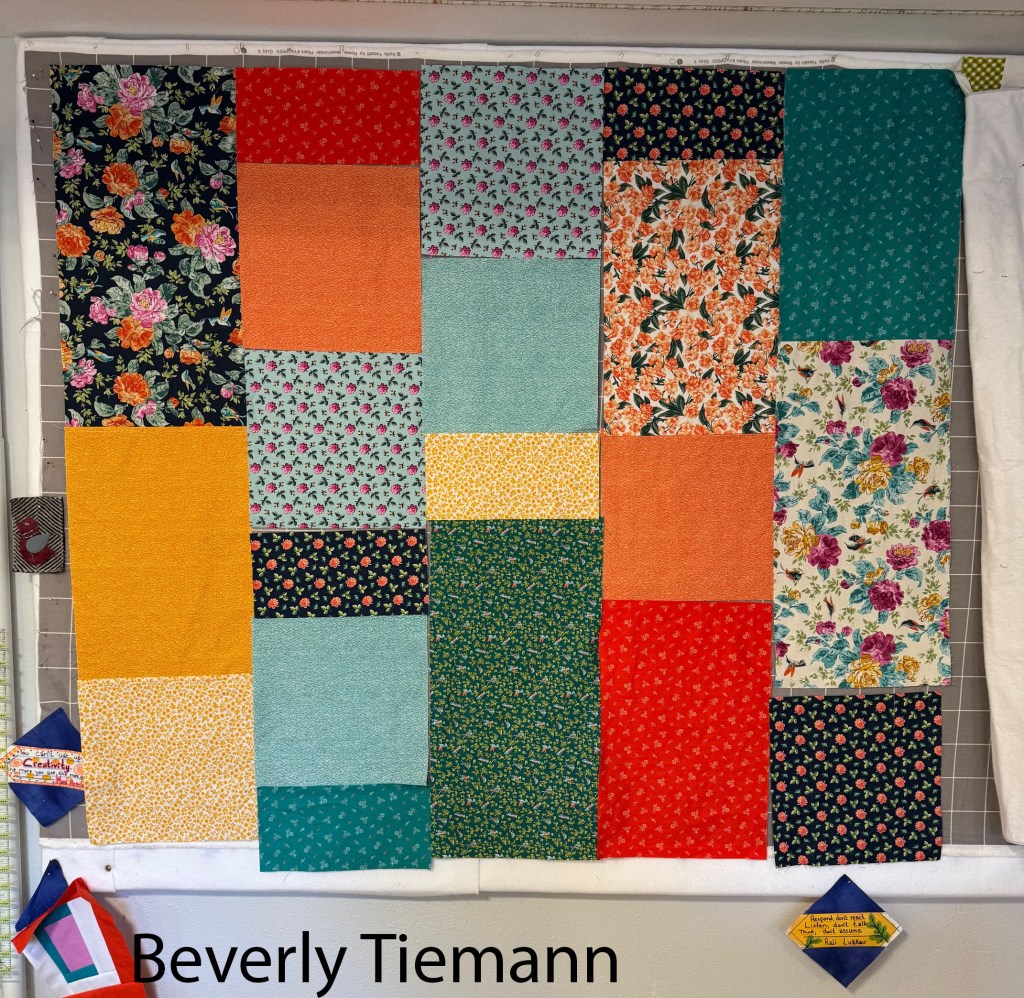
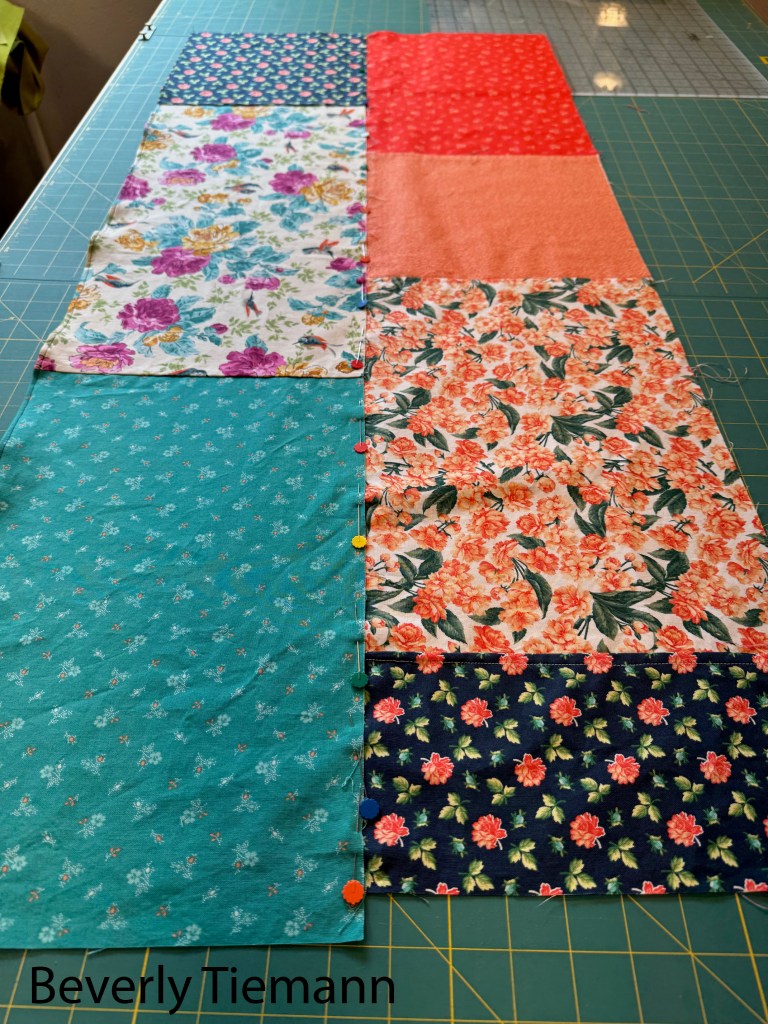
Let me start by saying, this is not a fit-to-the-edge, no-light-is-showing-through-the-sides, type curtain. I didn’t want that, so I gave myself a lot of grace and was a bit free in my calculations. The window is 47″ wide. If you are a careful reader, you may have noticed that I said it is “about 48 inches” in the paragragh above. I didn’t want to scare anyone with an odd number in the first paragraph. Using loose math: 5 panels, each at 10 inches wide would work taking into account shrinkage from seams and turning the side edges. The panels all started with the same equivalency in length but would need to be trimmed to match due to shrinkage from some having more horizontal seams. See the picture below from the design wall.
Sewing Right or Wrong Sides Together?
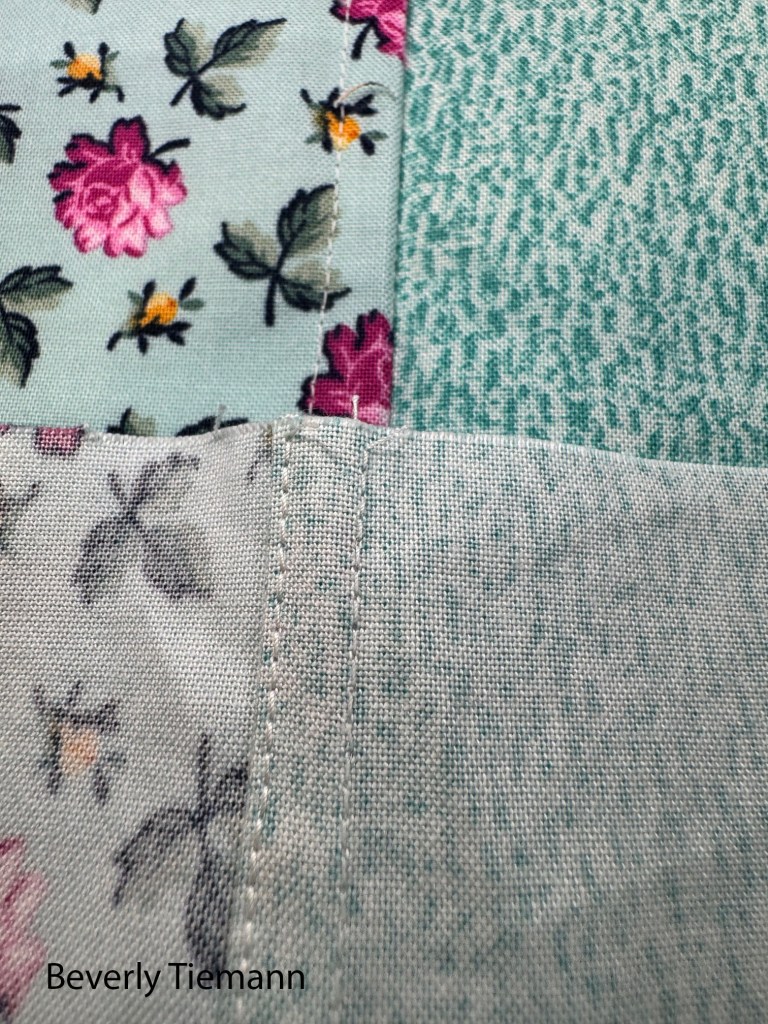
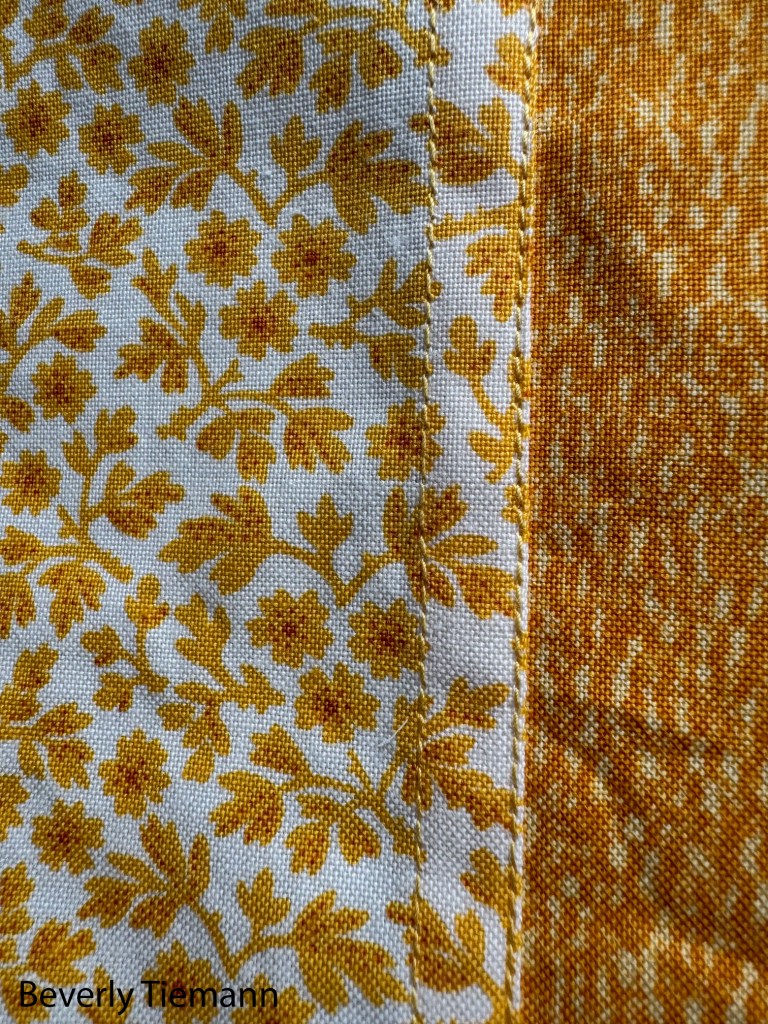
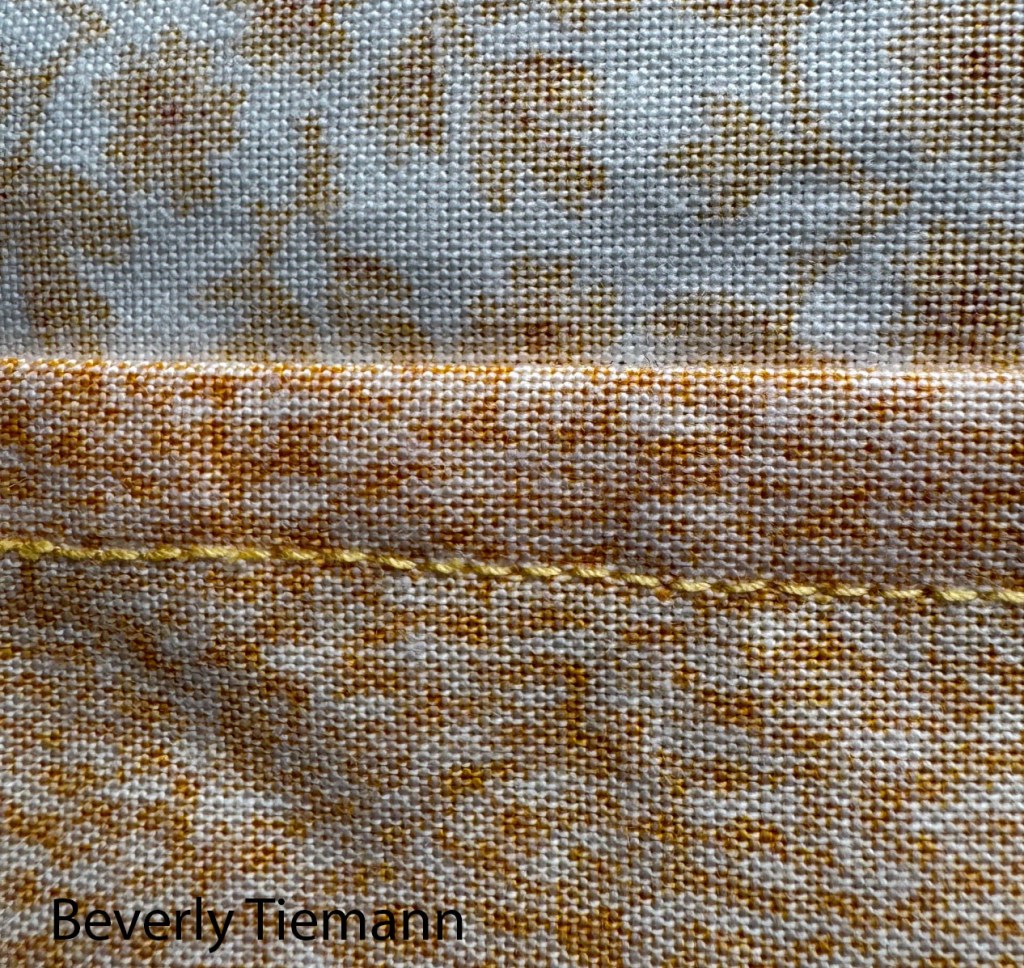
Sewing usually means putting right sides together. It is ok to do that with pojagi, too. But if you do, then you end up with your double seam on the wrong side of the print fabric. (See the picture above.) Pojagi fabrics are typically reversible, such as linen, batiks, or solids, so it doesn’t matter what sides you place together. If you want to see the double seam, you would start your seams by place the Wrong Sides together. See the pictures below to see the front and back sides of an example.
Long Seams Are Not Tricky
This is the only place where pins are necessary. Once the long panels are sewn, and the two outside (left and right side panels are finished by turning under a narrow hem and stitching down,) overlap one panel about 1/4″ on top of the next and pin. Sew in place with a basting stitch and then flip it over and sew like you did the original seams.
Thank you to Connecting Threads for the lovely fabric and also for the corresponding thread set! I am going to write a post about the threads very soon because there is a lot to be said about them! In this project I mainly used their Essential Threads – Ivory.

 Scrappinthread by Beverly Tiemann